Overview
Bella is greytHR’s virtual assistant, designed to help employees navigate everyday HR tasks like leave requests, payroll queries, and onboarding.
She was already live when I joined the project. But something felt off. Her tone wasn’t consistent. In one interaction, she sounded warm and conversational.
In another, she felt distant and clinical. Over time, that inconsistency started to matter. Especially in a product where people rely on clarity during sensitive or important moments.
Bella 🤖
Conversational AI Design for Greyptip Software.
Role: UX Writer & Conversational Designer.

My Role
I joined mid-process, working alongside an Associate UX Writer and closely with the design lead. We worked in a steady rhythm.
Design reviews, standups, and regular feedback loops helped us stay aligned with the product vision.
My focus was simple to define, but harder to execute. Take an abstract personality and make it real in every line Bella speaks.
The Problem
Bella had a personality on paper. The design team had already defined her as an INFJ. Thoughtful, empathetic, quietly confident.
But that personality wasn’t showing up consistently in the product. Instead, what users experienced was:
• variation in tone across similar situations
• different writing styles depending on who wrote the dialogue
• a lack of continuity in how Bella responded
In an HR product, this creates friction. When users are asking about payroll or applying for leave, they are not just looking for answers. They are also looking for reassurance, clarity, and a sense that the system understands them.


Outcome
Bella is now live across the greytHR platform, supporting employees and HR teams across India. The work resulted in a more consistent conversational experience and a shared system for future development.

Building Consistency Through Guidelines
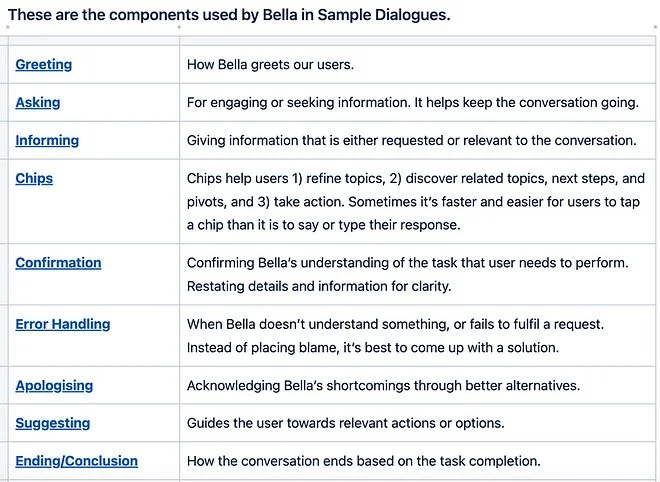
We created voice and tone guidelines that helped maintain consistency across contributors and scenarios.
Approach
Designing Conversation Flows
I worked on mapping Bella’s responses across different interaction states. Instead of writing isolated responses, I treated the system as a conversation that needed to feel coherent across hundreds of paths.